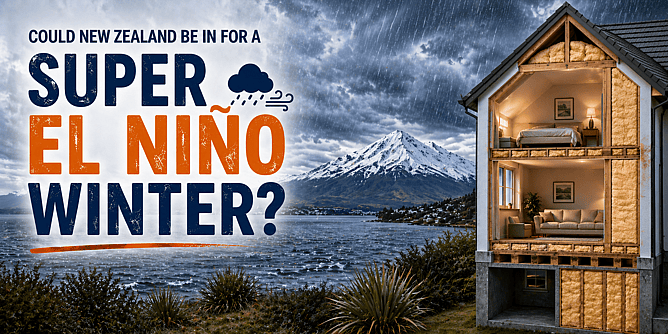
With weather experts forecasting the possibility of a significant or even “strong” El Niño developing this winter, many New Zealanders may be in for colder temperatures, stronger winds, and more extreme weather than we’ve experienced in recent years.
For homeowners and landlords, now is the perfect time to prepare—because when cold snaps hit, a properly insulated home can make all the difference.
What Is El Niño?
El Niño is part of a natural climate cycle called the El Niño–Southern Oscillation (ENSO).
It occurs when sea surface temperatures in the central and eastern Pacific Ocean become warmer than normal. This change affects wind patterns, cloud formation, and rainfall around the world—including here in New Zealand.
In simple terms:
Warm ocean temperatures shift weather systems
Trade winds weaken or change direction
Storm tracks and rainfall patterns move
Some areas become colder, wetter, windier, or drier than normal
El Niño events typically happen every 2 to 7 years and can last for several months.
What Is a “Super El Niño”?
A Super El Niño is an unusually strong El Niño event.
These are rarer and can have more dramatic impacts on global weather. The strongest recorded Super El Niño events occurred in:
1982–83
1997–98
2015–16
A Super El Niño can increase the likelihood of:
More extreme weather events
Longer dry spells in some regions
Stronger storms and wind in others
Bigger temperature swings
While meteorologists can’t yet say for certain if New Zealand will experience a full “Super El Niño,” current modelling suggests a strong event may develop through winter and into spring.
What Could an El Niño Winter Mean for New Zealand?
In New Zealand, El Niño often brings more south-westerly and southerly winds, especially in winter.
That can mean:
Colder Temperatures
Cold air flowing up from the Southern Ocean can create:
More frequent cold snaps
Frosty mornings
Lower overnight temperatures
Chilly winds that make homes harder to heat
Stronger Winds
El Niño winters are often windier.
Stronger winds can:
Push cold air through gaps and draughts in older homes
Increase heat loss through ceilings, walls, and floors
Make homes feel colder even when the temperature isn’t dramatically lower
Wetter in Some Areas, Drier in Others
Weather patterns can vary across New Zealand:
The West Coast and the lower South Island may experience more rain
Eastern and northern areas can be drier than usual
Inland South Island areas may see lingering cold conditions
For places like Taupō, Rotorua, South Waikato and Ruapehu District, colder southerly blasts can make winter feel especially harsh.
Why Insulation Matters During an El Niño Winter
When outdoor temperatures drop, your home naturally loses heat.
Without effective insulation:
Warm air escapes through the ceiling
Cold air rises through the floor
Heat transfers through uninsulated walls
Draughts make heating systems work harder
A well-insulated home helps by slowing down heat transfer.
That means your home stays:
✅ Warmer for longer
✅ Easier and cheaper to heat
✅ More comfortable day and night
✅ Healthier for your family
Where Should You Insulate First?
If you’re preparing for a cold winter, these areas matter most:
Ceiling Insulation
Heat rises, and in many homes, up to 35% of heat loss can occur through the roof.
Good ceiling insulation helps trap warmth where you need it.
Underfloor Insulation
Cold air can creep up through timber floors, making rooms feel icy.
Underfloor insulation creates a barrier between your home and the cold ground below.
Wall Insulation
Walls can account for a large amount of heat loss, especially in older homes.
Wall insulation helps keep warmth in and cold out.
Ground Moisture Barrier
If your home has a damp subfloor, a moisture barrier can reduce moisture rising into the house, helping improve warmth and air quality.
A Warmer Home Is a Healthier Home
Cold, damp homes are linked to:
Respiratory illnesses
Asthma flare-ups
Mould and condensation
Poor sleep and general discomfort
A warm, dry home can help protect children, elderly family members, and anyone with respiratory conditions.
That’s especially important during colder winters.
Check Your Insulation Before Winter Hits
If New Zealand does experience a strong or Super El Niño this winter, being prepared now could save you money and improve comfort all season long.
At Easy Insulation, we help homeowners and landlords across Taupō, Rotorua, South Waikato and Ruapehu District stay warmer with quality ceiling, underfloor, and wall insulation solutions.
We can also help eligible homeowners access available funding through the EECA Warmer Kiwi Homes programme.
Don’t wait for winter to bite.
Book your insulation assessment today and get your home winter-ready.
👉 BOOK NOW
Or call us on 0800 327 946
Sources
NIWA / Earth Sciences New Zealand
The impact of El Niño and La Niña on New Zealand’s climate
This provided the most relevant New Zealand-specific information on how El Niño affects seasonal temperatures, rainfall, and wind patterns.NIWA
Formidable El Niño expected to arrive this winter
A recent article discussing the possibility of a significant El Niño developing and its likely impacts on New Zealand this winter.Ministry for Primary Industries
Preparing for El Niño
Helpful for general explanations of what El Niño is and the typical seasonal impacts in New Zealand.NIWA
El Niño and La Niña
Used for confirming typical winter effects such as more southerly winds and cooler temperatures.1News
How a significant El Niño could impact NZ’s winter
Used as a current news reference for the “potential Super El Niño winter” angle.EECA (Warmer Kiwi Homes/home energy efficiency guidance)
Gen Less (energy-saving and insulation advice)
Tenancy Services (Healthy Homes Standards information)


