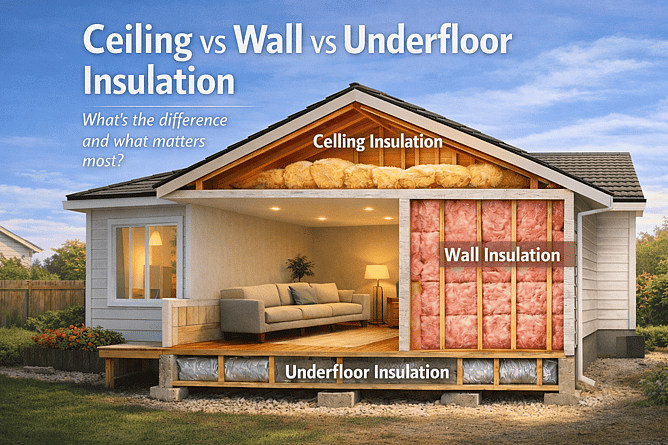
If your home isn’t properly insulated, one of the first questions homeowners ask is:
“Where should I insulate first?”
Ceiling insulation? Wall insulation? Underfloor insulation?
The answer depends on your home, but in most New Zealand homes, there is a clear order that provides the best comfort and the biggest energy savings.
Understanding where the biggest heat losses occur can help you decide where to start.
Why Insulation Matters in New Zealand Homes
Even homes that were insulated years ago may now fall below modern standards or have insulation that has shifted, compressed, or deteriorated.
Good insulation helps:
Keep homes warmer in winter
Reduce overheating in summer
Lower power bills
Improve comfort throughout the house
Support compliance with Healthy Homes Standards for rentals
The key is knowing which areas of the home have the biggest impact.
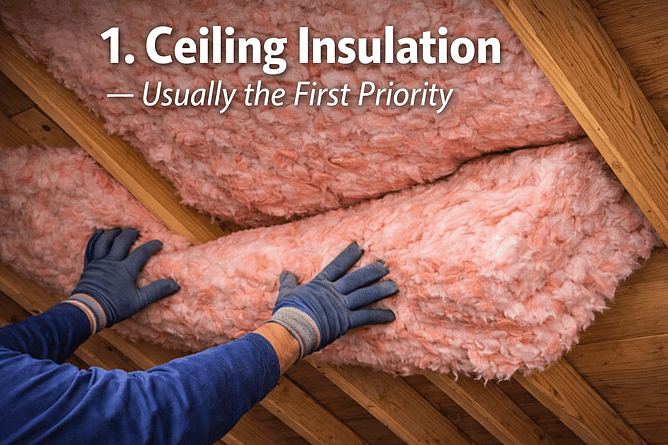
1. Ceiling Insulation – Usually the First Priority
In most homes, ceiling insulation should be the first place to start.
Warm air naturally rises, which means a large amount of heat escapes through the roof if the ceiling is poorly insulated.
In fact, heat loss through the ceiling can account for a significant portion of a home’s total heat loss.
Installing or upgrading ceiling insulation can:
Dramatically improve warmth in winter
Reduce heat entering the home during summer
Lower heating costs
Make the home more comfortable overall
Ceiling insulation is also often the easiest area to upgrade, as most homes have roof spaces that allow installation without major building work.
For this reason, ceiling insulation usually provides the biggest improvement for the lowest cost.
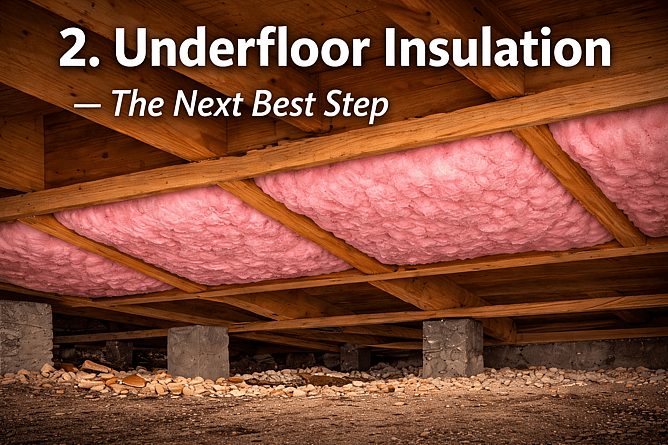
2. Underfloor Insulation – The Next Best Step
If your home has a timber floor with space underneath, underfloor insulation can make a noticeable difference.
Without insulation beneath the floor, cold air moves through the subfloor area and cools the floors above. This is why many homes feel cold underfoot in winter.
Underfloor insulation helps by:
Reducing cold air movement beneath the home
Keeping floors warmer
Improving overall comfort
Supporting energy efficiency
It’s especially effective when combined with a ground moisture barrier, which helps keep damp air from rising into the home.
Not every home can be insulated underneath — access height and construction type can affect suitability — but where possible, it’s often the second most effective upgrade after ceiling insulation.
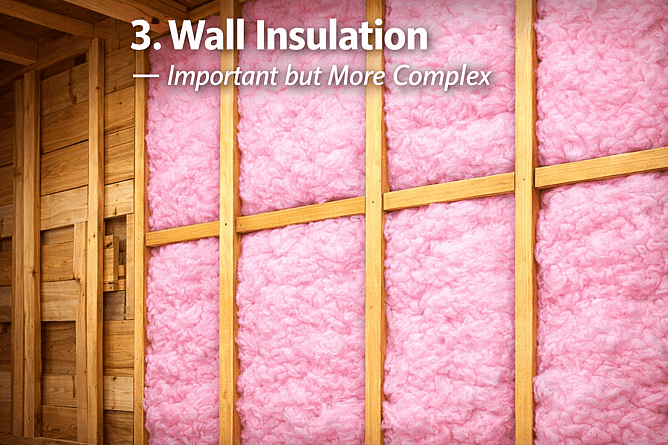
3. Wall Insulation – Important but More Complex
Wall insulation can provide significant thermal benefits, but installing it in existing homes is usually more complex than installing it in ceilings or floors.
Many homes built before modern insulation standards have empty wall cavities, but accessing them may require:
Removing wall linings
Drilling access points
Using specialised retrofit techniques
For this reason, wall insulation is often done:
During renovations
When wall linings are already being replaced
In new builds
That said, when installed properly, wall insulation can further improve comfort by reducing heat loss through external walls.
What If Your Home Has No Insulation at All?
If your home has little or no insulation, the typical upgrade order is:
This approach delivers the largest comfort improvements as quickly as possible.
Each layer works together to create a home that holds warmth more effectively.
Grants May Be Available for Insulation
Some New Zealand homeowners may be eligible for insulation assistance through programmes such as Warmer Kiwi Homes.
This funding can help cover part of the cost of installing:
Eligibility depends on factors such as income, location, and the current insulation in the home.
If you’re unsure whether your home qualifies, an insulation assessment can help determine what options may be available.
Every Home Is Different
While the ceiling → underfloor → walls approach works for most homes, every property is different.
Factors such as:
Existing insulation levels
Home construction type
Subfloor access
Renovation plans
Budget considerations
can all influence the best approach.
That’s why a proper inspection can be useful before deciding where to start
If you’re unsure about the insulation in your home, a professional assessment can help identify where improvements will make the biggest impact. Ask us > 0800 327 946


