How Wall and Ceiling Insulation Can Make Your Home Quieter.

Most people think about insulation in terms of keeping their home warm in winter and cool in summer.
But there’s another major benefit that many homeowners don’t realise until after installation:
Insulation can significantly reduce noise.
If you live near a busy road, have noisy neighbours, or simply want a quieter home environment, insulation can play an important role in improving acoustic comfort.
Here’s how it works.
How Insulation Reduces Noise
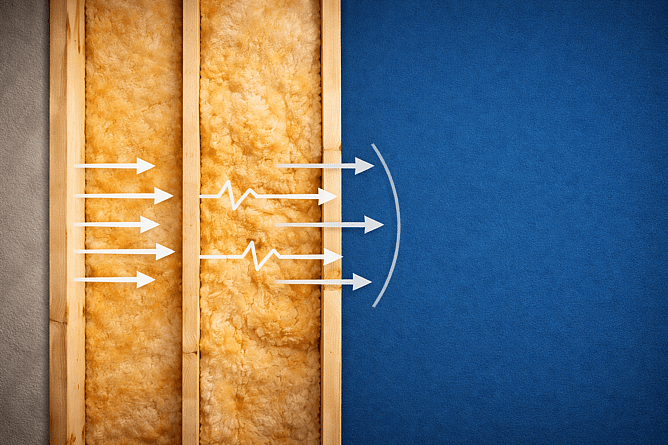
Sound travels through the air and through solid structures like walls, floors, and ceilings.
When a wall or ceiling is empty inside, sound waves move through the cavity easily. But when insulation fills that space, the fibres absorb and disrupt those sound waves, reducing the amount of noise that travels through.
In simple terms, insulation acts like a sound buffer inside your walls and ceilings.
This can make a noticeable difference in everyday situations, such as:
Traffic noise from nearby roads
Noise between rooms in the house
Neighbours or nearby activity
TV, music, or conversations travelling through walls
While insulation won’t completely soundproof a home, it can reduce noise levels enough to make your home noticeably quieter and more comfortable.
Where Insulation Helps Reduce Noise the Most

Wall insulation is often the most effective way to reduce noise transfer.
This is especially helpful for:
Homes near main roads
Townhouses or properties close to neighbours
Bedrooms next to living areas or entertainment spaces
Adding insulation inside wall cavities helps absorb sound before it passes from one room to another.
Ceiling insulation can also help reduce noise coming from above or below.
For example:
Reducing noise between floors in multi-level homes
Damping sound from the roof during heavy rain
Minimising sound transfer between living areas and bedrooms
It also provides the added benefit of improving thermal comfort and energy efficiency at the same time.
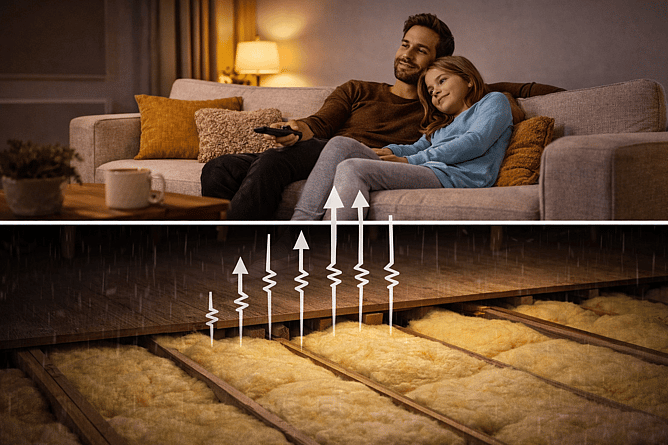
Underfloor insulation contributes less to noise reduction than wall or ceiling insulation, but it can still help reduce sound movement through floors.
This is particularly helpful in homes with timber floors where sound can echo or travel easily.
Which Insulation Products Reduce Noise Best?

Most insulation materials provide some level of acoustic benefit, but certain products perform better than others.
Polyester insulation is particularly good for sound reduction because of its fibre density and structure.
It’s commonly used where homeowners want both:
Thermal insulation
Acoustic insulation
Glasswool insulation can also reduce noise effectively when installed correctly.
The most important factor is ensuring the insulation completely fills the cavity without gaps.
Can Insulation Soundproof a Home?
It’s important to understand that insulation does not completely soundproof a room.
True soundproofing usually requires additional building techniques such as:
Double walls
Acoustic plasterboard
Resilient channels
Specialised soundproof construction
However, insulation alone can still make a significant difference in reducing everyday noise levels inside a home.
For most homeowners, the improvement in comfort is very noticeable.
Noise Reduction Is an Added Bonus
The main reason people install insulation is to improve energy efficiency and comfort.
But the noise reduction is often a welcome side benefit.
Once insulation is installed, many homeowners comment that their homes feel:
Quieter
More peaceful
More private between rooms
This is especially noticeable in bedrooms and living spaces.
Grants May Be Available for Insulation
In some cases, homeowners may be eligible for insulation funding through programmes such as Warmer Kiwi Homes.
If your property qualifies, this can significantly reduce the cost of installing insulation in ceilings and underfloors.
Eligibility depends on factors such as:
Household income
Location
Existing insulation levels
We can help assess whether your home may qualify for available grants.
Contact Us > 0800 327 946 or fill out the Free Insulation Subsidy form to see if you are eligible.


