Here’s why it keeps your home cooler in summer, too
Most Kiwis think of insulation as the thing that keeps us warm during the cold months — and it absolutely does. But good insulation also plays a big role in keeping your home cool in summer, reducing strain on your air conditioner or heat pump, cutting energy bills and helping your home feel more comfortable year-round. Below, we’ll explain how that works, what areas matter most, and simple steps you can take to get the best summer performance from your home.
How insulation keeps heat out (as well as keeping warmth in)
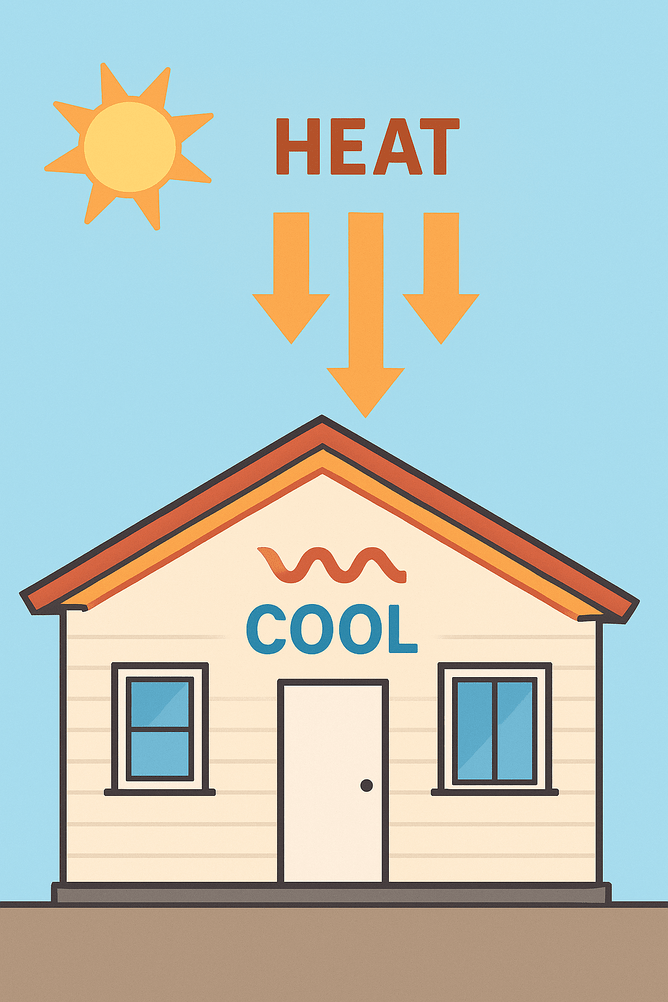
Insulation’s job is to slow the flow of heat. That works both ways: in summer, it reduces the amount of outside heat getting into your living spaces, and in winter, it stops the warm air inside from escaping to the cold. Think of the ceiling, walls and underfloor as a thermal blanket around your home — the thicker and more continuous that blanket is, the longer your cool indoor air will stay where it belongs. This reduces peak indoor temperatures and keeps the house comfortable for longer in the evenings and early mornings.
Why that matters for your air conditioner/heat pump
Air conditioners and heat pumps are excellent at both cooling and heating, but they’re most efficient when they’re not fighting a leaky house. When your home has good insulation and fewer draughts:
The system runs for shorter periods and cycles less frequently.
It uses less electricity to hold a steady temperature.
You avoid the “blast, then nothing” pattern that happens when cold or hot air rapidly leaks away.
Put simply: a well-insulated house allows your air conditioner/heat pump to work smarter, not harder — and that shows up as lower power bills and a longer life for the equipment. EECA highlights that insulation reduces the work your cooling and heating systems have to do and is one of the most effective ways to improve home energy efficiency. (https://www.eeca.govt.nz/for-homes/energy-saving-technology/heating-and-cooling/heat-and-cool-efficiently-at-home/)
Which parts of the house matter most in summer
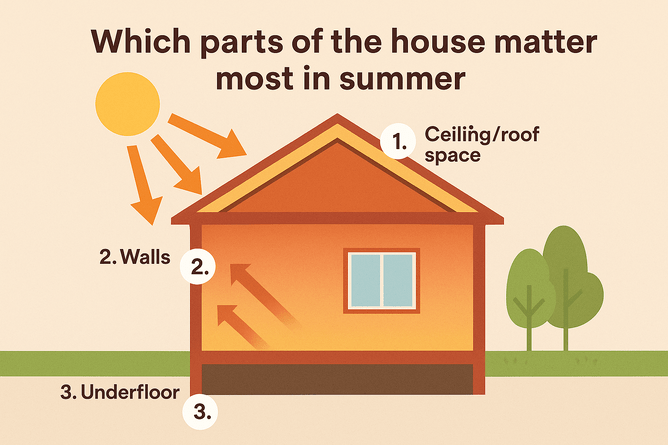
While every home is different, in New Zealand, the priority order for summer performance is usually:
Ceiling/roof space — roof surfaces take the full brunt of the sun. Heat radiates through an uninsulated ceiling quickly, so good ceiling insulation is the single most effective barrier against summer heat gain.
Walls — especially north- and west-facing walls that get strong afternoon sun; insulated walls cut down heat transfer.
Underfloor — stops heat coming up from warm ground or prevents the floor from warming too quickly on sunny days; it also helps keep internal temperatures steady overnight.
Windows & shading — insulation can’t stop the sun shining through glass, so combine insulation with good external shading, blinds or awnings to block direct solar gain. External shading is particularly effective at reducing peak temperatures.
Other summer benefits you might not expect
Insulation does more than simply lower peak temperatures:
Lower humidity swings — by stabilising indoor temperatures, insulation helps reduce situations where warm, humid air condenses on cool surfaces (which can lead to mould). That’s good for both comfort and health.
Better overnight cooling — a well-insulated home cools down more slowly at night but also retains the cooler night air for longer if you ventilate during the evening. That means fewer sleepless, oven-hot nights.
Reduced noise — insulation in walls and ceilings also improves acoustic comfort; in summer, we often have windows open, but in built-up areas, extra insulation can keep the house quieter when you want it to be.
Health and wellbeing — insulating against heat reduces heat stress for vulnerable people (older Kiwis, young children and those with health issues) and is part of creating a more consistent, healthy indoor environment.
Practical tweaks to get the most summer benefit
Insulation is the foundation, but pairing it with a few straightforward measures will give the best result:
Check your ceiling depth — older or compressed insulation might not be performing. If ceiling insulation is below modern recommended depths, topping it up gives a big return.
Seal the gaps — block draughts around doors, skirting and service penetrations. Sealing reduces uncontrolled air flow, which undermines insulation performance.
Use external shading — awnings, pergolas, adjustable blinds and trees can drastically reduce solar gain through windows. Combine shading with insulated walls/ceilings for best results.
Night purging — when the evening is cooler, open windows to let the house flush with cool air, then close them and keep the cool air in. Insulation helps cool air stay longer.
Maintain your air conditioner/heat pump — clean filters and correct sizing help the system move air efficiently; with good insulation, the system won’t need to oversize to counter heat gains.
The money side — it’s not just comfort
Insulation saves energy year-round. EECA and local studies show measurable savings from retrofitting insulation, and those savings include reduced electricity for cooling as well as for heating. While exact numbers depend on your home, climate and habits, the bottom line is consistent: better insulation cuts the running costs of both cooling and heating systems. Easy Insulation also points out available insulation grants and programmes that can reduce upfront costs, making insulation a cost-effective upgrade for many homeowners. (https://www.eeca.govt.nz/for-homes/improve-your-home/insulate-your-home/)
Summer-ready checklist
If you want a quick action list to prepare for summer, start with this:
Inspect ceiling insulation depth and condition; top up if needed.
Add or maintain external shading on sun-facing windows.
Seal draughts and holes around doors/windows and service entries.
Service your air conditioner/heat pump and clean filters before the hot season.
Consider underfloor insulation if you don’t already have it — it helps even in summer.
Insulation isn’t a winter-only fix. It’s a year-round investment in comfort, health and energy savings. In summer, it keeps the heat where it belongs — outside — and lets your air conditioner or heat pump do less work while still keeping your home comfortable. If you’re thinking about upgrades, start with a free assessment so you know which areas will give the best summer and winter returns for your home. Easy Insulation can help with practical, locally-focused advice and installation options — including information on available grants to reduce costs.


