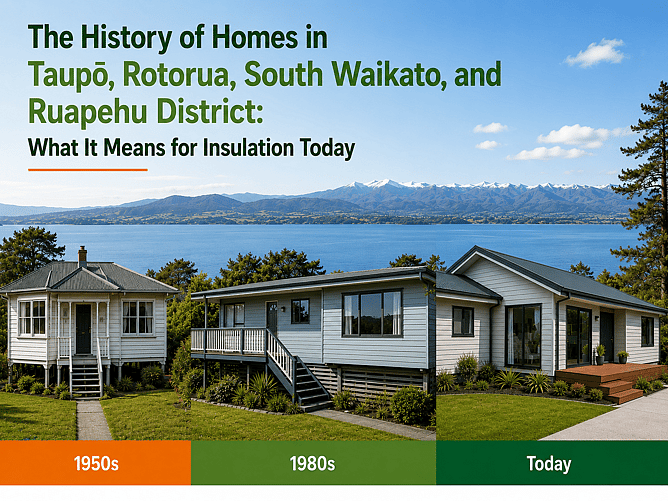
Across the Taupo, Rotorua, South Waikato, and Ruapehu District regions, homes have been built over many decades, each reflecting the building standards, materials, and insulation practices of their time.
As a result, insulation performance can vary significantly from one property to another, even within the same street.
Understanding the age and history of a home is one of the most important factors when assessing insulation. What was considered adequate in the 1950s or 1980s is very different from what is required today. Many homeowners are surprised to learn that their insulation—if it exists at all—may be outdated, insufficient, or no longer performing properly.
This guide explains how insulation has evolved over time and what homeowners in the Taupo, Rotorua, South Waikato, and Ruapehu District areas should know about different types of homes, from older properties to modern builds and renovated houses.
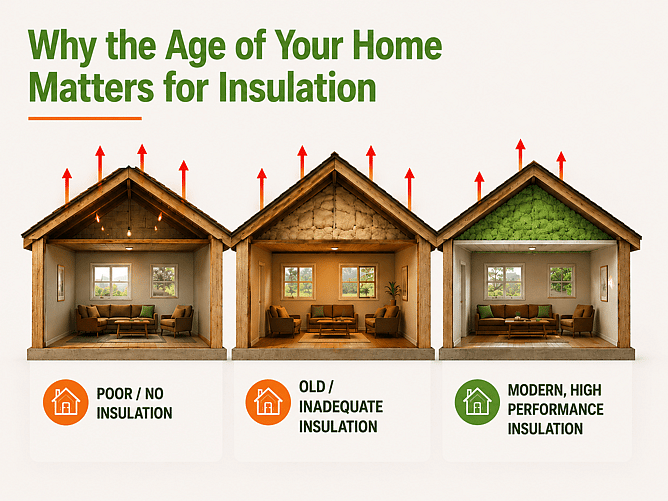
Why the Age of Your Home Matters for Insulation
Building standards in New Zealand have changed significantly over the past 70 years. Earlier homes were often designed with ventilation in mind rather than insulation. Heating was cheaper, and energy efficiency was not a major consideration.
As a result, many older homes were built with:
Little or no insulation
Thin insulation that no longer meets modern standards
Gaps or incomplete coverage
Materials that have deteriorated over time
In regions like Taupo, Rotorua, South Waikato, and Ruapehu District, where winters can be cold and damp, these shortcomings can lead to ongoing comfort and moisture problems.
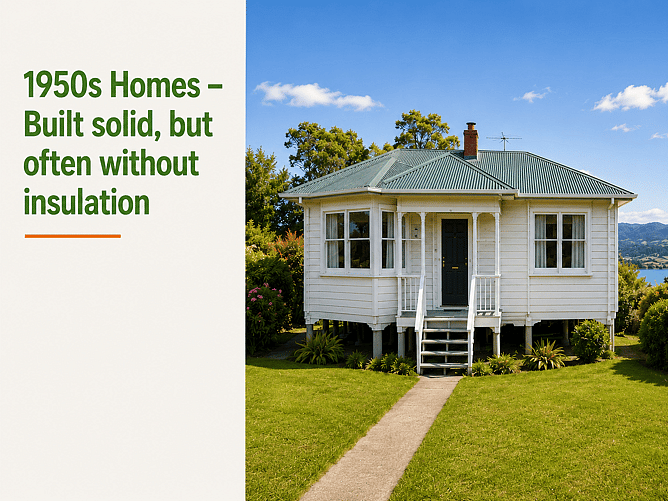
1950s Homes – Built solid, but often without insulation
Homes built in the 1950s are common throughout Taupo, Rotorua, South Waikato, and Ruapehu District. These properties are often well-constructed, with strong timber framing and durable materials, but insulation was rarely a priority at the time.
In many cases, 1950s homes originally had:
No ceiling insulation
No underfloor insulation
No wall insulation
Drafty construction methods
Heating systems were typically relied upon to provide comfort rather than insulation.
What these homes often have today
Some 1950s homes have had insulation added later, particularly during renovations or property upgrades.
However, the quality and coverage can vary widely.
Common issues include:
Thin or outdated ceiling insulation
Missing insulation in certain areas
Underfloor insulation installed only partially
Insulation that has settled or compressed
Because these homes were not designed with insulation in mind, retrofitting insulation can sometimes require careful planning.
Special Considerations for 1950s Homes
In the Taupo, Rotorua, South Waikato, and Ruapehu District, many 1950s homes sit on timber piles with open space underneath. This makes underfloor insulation particularly important.
Other considerations include:
Moisture levels beneath the house
Ventilation requirements
Access to ceiling cavities
Upgrading insulation to modern standards
Upgrading insulation in these homes can dramatically improve comfort and reduce heating costs.
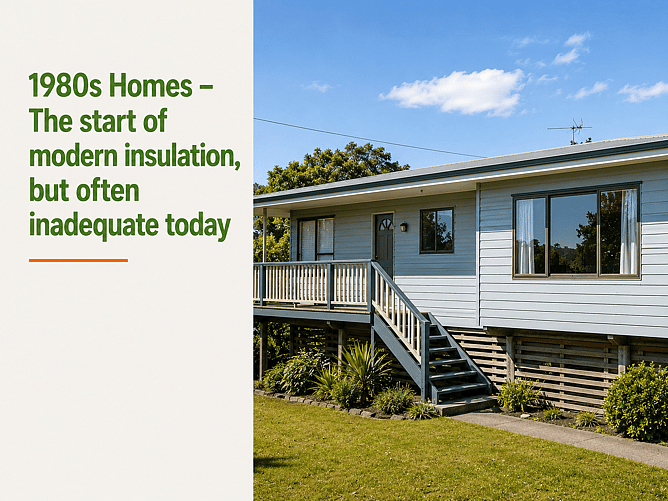
1980s Homes – The start of modern insulation, but often inadequate today
By the 1980s, insulation had become more common in new homes. Building practices began to recognise the importance of retaining heat and improving energy efficiency.
However, the insulation standards of that era were still relatively modest compared with today’s requirements.
Typical features of 1980s homes include:
Basic ceiling insulation
Limited underfloor insulation
Minimal or no wall insulation
Lower insulation thickness levels
At the time, these installations were considered acceptable. Today, they are often below recommended performance levels.
What Has Changed Since the 1980s
Modern insulation standards require higher thermal performance, commonly measured by R-values. Homes built in the 1980s may have insulation that is technically present but no longer adequate.
Common problems include:
Insulation that has settled or shifted
Reduced effectiveness due to age
Incomplete coverage
Poor installation practices
Many homeowners assume their home is properly insulated simply because insulation exists. In reality, the performance may be far below current expectations.
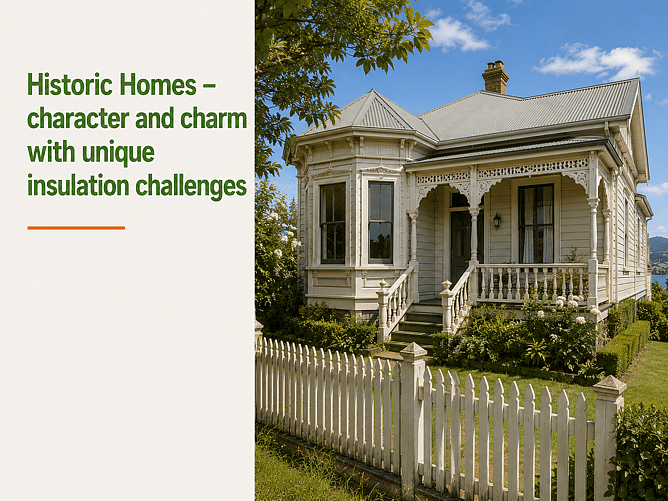
Historic Homes – character and charm with unique insulation challenges
Historic homes—particularly older villas and cottages found in parts of Taupo, Rotorua, South Waikato, and Ruapehu District—are valued for their character and heritage features. However, these homes can present unique insulation challenges.
These properties were often built long before insulation was introduced into building regulations.
Common characteristics include:
Timber weatherboard construction
High ceilings
Single-glazed windows
Large roof spaces
Raised timber floors
While these features create charm and architectural appeal, they can also lead to significant heat loss.
Special Considerations for Historic Homes
When upgrading insulation in historic properties, care must be taken to protect the structure and maintain ventilation.
Key considerations include:
Preserving original building materials
Avoiding moisture build-up
Maintaining airflow
Respecting heritage requirements
Professional installation is particularly important in these homes to ensure insulation improves comfort without causing unintended problems.

Modern Homes – Built to Higher Standards, But Still Not Always Perfect
Homes built in the last 15 to 20 years typically include insulation as part of the original construction. Building codes now require minimum insulation levels for ceilings, walls, and floors.
These homes usually feature:
Ceiling insulation installed during construction
Underfloor or slab insulation
Wall insulation
Improved sealing and building materials
However, even modern homes can experience insulation issues.
Common Problems in Newer Homes
Despite higher standards, insulation performance can still be affected by:
Installation errors
Gaps or missing sections
Settling or compression
Changes made during renovations
In colder regions like Taupo, Rotorua, South Waikato, and Ruapehu District, even modern homes may benefit from insulation upgrades to improve comfort and energy efficiency.
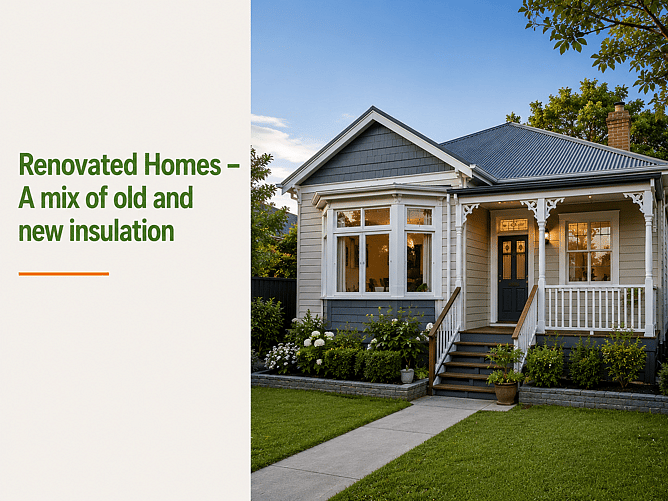
Renovated Homes – A mix of old and new insulation
Renovated homes are common throughout Taupo, Rotorua, South Waikato, and Ruapehu District. These properties often combine older construction with newer additions, which can create uneven insulation performance.
For example:
A renovated kitchen may be well insulated
Older bedrooms may have minimal insulation
Extensions may meet modern standards
Original sections may not
This mix can lead to noticeable temperature differences throughout the home.
What to Watch For in Renovated Homes
Renovations sometimes focus on visible upgrades—such as new kitchens or bathrooms—while insulation improvements are overlooked.
Common issues include:
Partial insulation upgrades
Inconsistent insulation levels
Gaps between old and new sections
Poor thermal performance in original areas
An insulation assessment can identify these inconsistencies and help create a more balanced indoor environment.
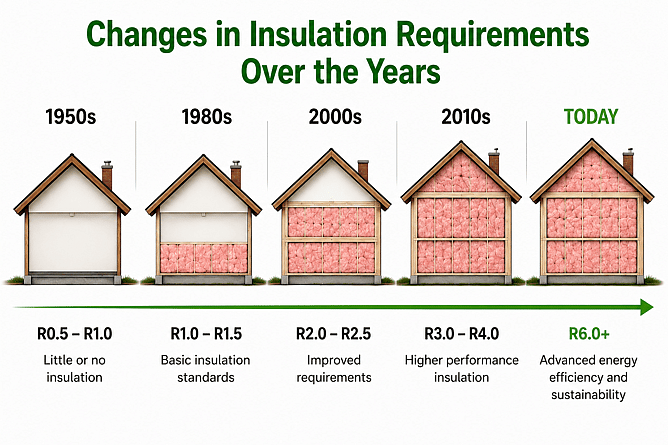
Changes in Insulation Requirements Over the Years
New Zealand’s building standards have gradually strengthened to improve energy efficiency and indoor comfort.
Key changes include:
Greater emphasis on thermal performance
Higher recommended R-values
More consistent installation practices
Stronger requirements for rental properties
Today, insulation is considered an essential component of a healthy home rather than an optional upgrade.
In rental properties, compliance with the Healthy Homes Standards requires:
Ceiling insulation
Underfloor insulation
Minimum performance levels
Proper installation
These requirements have encouraged many homeowners and landlords to upgrade older insulation systems.
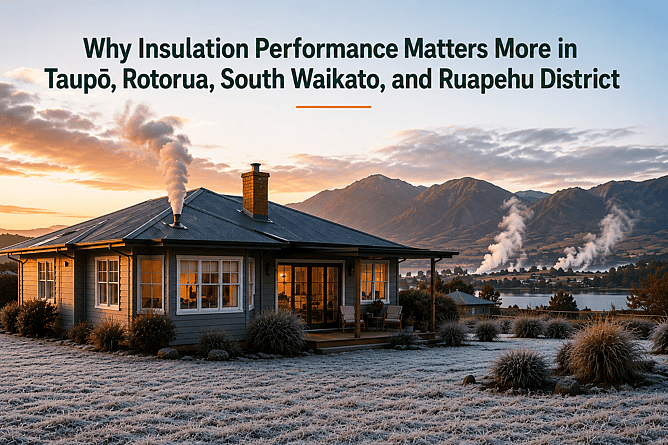
Why Insulation Performance Matters More in Taupo, Rotorua, South Waikato, and Ruapehu District
The local climate places extra demands on insulation systems.
These regions commonly experience:
Cold winter temperatures
Frosty mornings
Damp ground conditions
When insulation is outdated or inadequate, these conditions quickly lead to:
Cold indoor temperatures
High energy bills
Dampness and condensation
Uneven comfort levels
That is why insulation upgrades often deliver noticeable improvements in these areas.
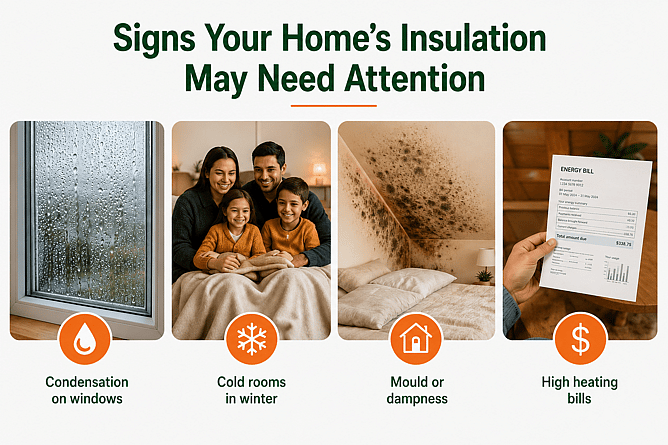
Signs Your Home’s Insulation May Need Attention
Regardless of the age of the home, there are clear indicators that insulation performance may be insufficient.
You may notice:
Rooms that feel cold in winter
High power bills
Uneven temperatures between rooms
Cold floors
Condensation on windows
Damp or mould problems
Difficulty maintaining warmth
These symptoms are common across many homes in the Taupo, Rotorua, South Waikato, and Ruapehu District.
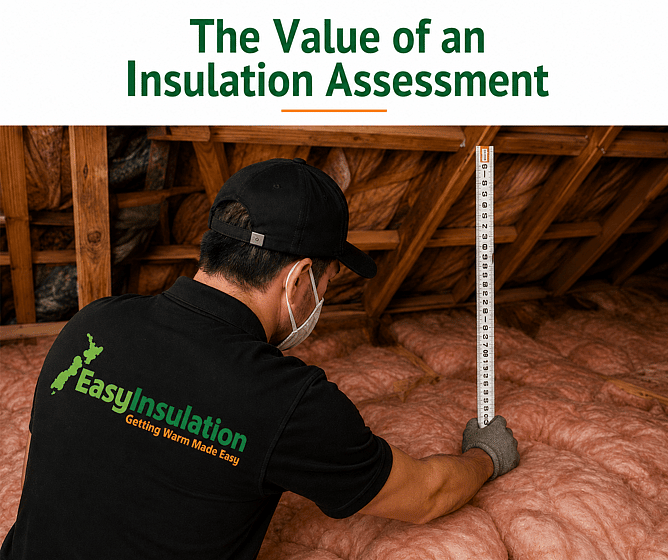
The Value of an Insulation Assessment
Because insulation is hidden from view, many homeowners are unsure whether it is performing properly.
A professional assessment can determine:
Whether insulation is present
Whether it meets current standards
Whether upgrades are needed
Which areas of the home require attention
This information allows homeowners to make informed decisions about improving comfort and energy efficiency.

A Practical Approach to Insulation for Any Type of Home
Whether your property is a 1950s house, a 1980s build, a historic villa, a modern home, or a renovated property, insulation plays a critical role in comfort and performance.
Improving insulation can lead to:
Warmer indoor temperatures
Lower energy costs
Reduced dampness and mould
More consistent room temperatures
Better overall living conditions
In regions like Taupo, Rotorua, South Waikato, and Ruapehu District, these benefits are particularly valuable during the colder months.
If you are unsure about the insulation in your home, especially if it was built or renovated many years ago, a professional inspection can quickly identify what is in place and whether upgrades are needed.
Many households may also be eligible for government assistance to help reduce the cost of improving insulation.
Call us on 0800 327 946 to book a FREE assessment
or fill out our Contact Form.
If you would like to see if you qualify for a subsidy, fill out our Subsidy Form or call us on 0800 327 946 to find out.


